“I had a big maple hanging right over the porch and Martin lowered every limb on a rope. Not one shingle touched. He explained why he was keeping most of the canopy and just cleaned out the deadwood.”
“An old oak split after a windstorm and was leaning toward the house. He came out, looked at it, and told me straight it had to go. Clean removal, stumps ground, yard left tidy.”
“After the ice, I had limbs down all over the driveway. He showed up with the chipper, cut everything to size, and hauled it off. No fuss, no upselling, just got it done.”
“My cedar hedge had grown into the neighbour's walkway. He trimmed it back evenly and told me how much to take off each year so it stays healthy. Fair price and a free estimate up front.”
Brush Chipping in Lakefield, Done Right

In Lakefield, the older homes along the river sit under big maples and oaks, and those trees drop a lot of wood. After a windstorm or a weekend of pruning, the pile builds up fast. I bring my chipper right to your property and turn that mess into useful mulch in one visit. The key is keeping the pile clean: no stones, no wire, no lumber. Those dull the blades and slow everything down. I check the pile before I start, and if something doesn't belong, I set it aside.
Lakefield lots often have narrow gates, low branches, and heritage roofs that can't be touched. I work carefully around those constraints. When I lower heavy limbs, I use ropes so nothing drops onto a roof or a garden bed. The chips can stay with you for paths, beds, or around your trees, or I can haul them away. It's the easiest way to deal with limbs brought down by an ice storm without dragging everything to the curb and waiting for pickup. I also clear the work area and leave the property tidy.
If you're in Lakefield and have a pile of branches, tell me roughly how big it is and I'll give you a free estimate. Call (249) 494-5209 and we'll set up a time.
Tree Planting and Transplanting in Lakefield

I plant trees the way I would want them planted in my own yard. In Lakefield, that starts with reading the ground. The older homes along the river sit on lots with mature canopies, and the soil underneath is often compacted from decades of foot traffic, so I open the planting hole wider than the root ball and loosen the sides rather than slicking them smooth. Around the village the ground shifts from deeper loam to thin soil over rock, and that difference decides everything: a white pine that sulks in shallow ground will thrive a few streets over where the earth runs deeper. I pick the species for the spot, not the other way around, often native maples, serviceberry, white pine or tamarack.
Depth matters more than most people realize. I set every tree so the root flare stays visible at grade, and I keep mulch pulled back from the trunk instead of piling it against the bark. On the heritage properties near the river, I lower heavy limbs by rope so the old roofs stay untouched while I work, and I plan the access before I start: a narrow side gate or a tight drive changes how I bring in stock and equipment. I stake only when the site genuinely needs it, and I come back to pull the stakes once the roots take hold. I can also move smaller trees within your property with a full root ball, ideally while they are dormant.
If you are thinking about a new tree, a replacement, or shifting one that is in the wrong place, call me at (249) 494-5209 for a free estimate.
Tree Disease Treatment in Lakefield, Ontario

In Lakefield, the older homes along the river sit under big, mature trees, and those trees show their age in ways that are not always obvious at first glance. A maple that drops its leaves in August, a spruce with bare patches at the top, an oak oozing dark sap from the bark: each one is telling me something different. Before I reach for a saw, I look at the whole picture. I check the leaves and buds, peel back a little bark, probe the root flare, and read the soil and drainage. Is this a fungal disease, a canker, internal decay, or an old wound from the 2022 derecho that has quietly let rot in? The answer changes everything I recommend.
Working these river properties takes care. The heritage roofs and tight side yards mean I lower heavy limbs by rope rather than drop them, and I rig from the tree itself so nothing lands where it should not. Some problems respond well to corrective pruning and better care around the base, others need a treatment plan, and a few trees are honestly better replaced before the next big windstorm takes the decision out of our hands. I will not sell you a treatment that will not help. If a tree can be saved, I say so; if it cannot, I say that too.
I walk you through the options in plain language, show you what I am seeing, and leave the choice with you. The estimate is free, so call (249) 494-5209 and let me take a look at your tree.
Tree Trimming in Lakefield, Done by Hand
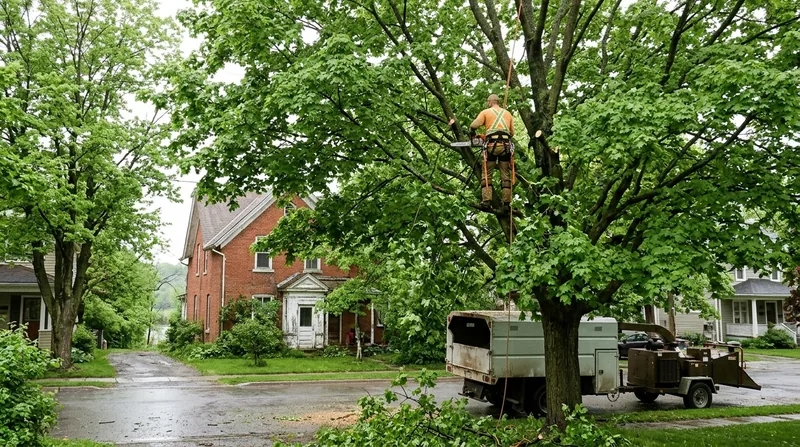
In Lakefield, most of my trimming calls start the same way: a limb is hanging over a roof, a driveway or a neighbour's fence, and the homeowner wants it gone before the next windstorm. The older homes along the river sit under big trees, and those trees have had decades to reach out over the shingles. When I work a property like that, I lower every heavy limb by rope so the heritage roofs below stay untouched. Nothing gets dropped, and nothing gets dragged across a gutter or a flower bed on the way down.
I trim trees across Peterborough myself, from the first climb to the last rake. Around Lakefield I look for the maples that have simply outgrown a yard, the low limbs over a walkway, and the crossing branches rubbing each other raw in the canopy. I take out what is dead, crowded or too low, lift the crown where you need clearance, and shape the tree so it stays balanced through our heavy snow and spring winds. What I will not do is top a tree or strip the inside of the canopy. A tree I have trimmed should still look like itself, and it should close its wounds on its own. If your tree only needs a light clean-up, I will tell you that instead of selling you a bigger job.
Access matters here. Some of these lots are tight, with a shed or a fence line close to the trunk, so I plan the rope work before I climb and keep the chipper where it fits. I clean up before I leave, and the estimate is free. If you have a tree in Lakefield that needs trimming, call me at (249) 494-5209 and I will come take a look.
Tree Removal in Lakefield, Ontario
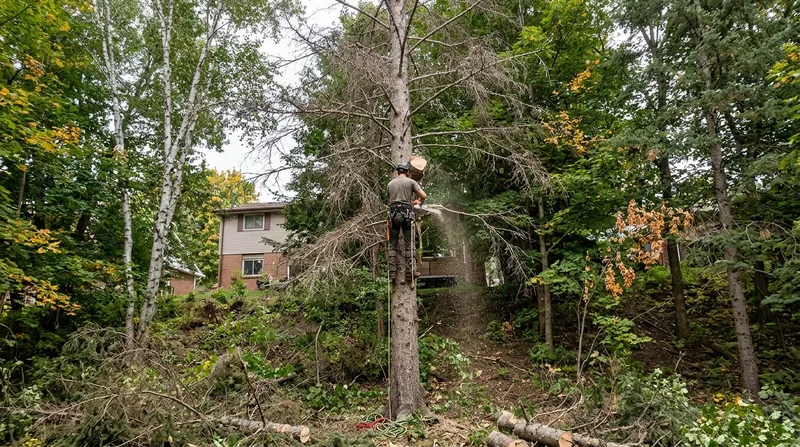
In Lakefield, most of my tree removal calls come from the older streets near the river, where the houses went up long before the trees reached their full height. Those properties hold big maples, oaks and cedars that have been shading the same roofs for generations. When one of them dies or starts to lean, it has to come down carefully, because the heritage roofs underneath are not something anyone wants to replace. I climb these trees myself and lower the heavy limbs on rope, piece by piece, so nothing drops where it should not.
Ash borer has changed the work here too. A lot of the ash along the back lanes and property lines is now brittle and unpredictable, and that is exactly the kind of tree I do not want to fell in one go. I take it down in sections from the top, using rigging to control every piece. Tight backyards where no machine can reach are normal in Lakefield, so I plan the drop areas before I cut and keep the brush chipped as I go. Before the saw comes out, I check the permit situation, since the City of Peterborough may require a permit for a private tree removal, with a simpler path for dead or ash borer trees.
Once the tree is on the ground, I chip the brush and either haul the wood away or cut it to length and stack it for you. If you have a tree that worries you, call me at (249) 494-5209 for a free estimate.
Lakefield, as the arborist sees it
In Lakefield, the older homes sit close to the water, and the trees around them have had generations to get big. I notice it the moment I pull up: wide maples and oaks leaning over rooflines, mature cedars hedging the property lines, and the occasional birch or spruce tucked into a side yard where it has quietly outgrown its space. These are not small trees, and the houses beneath them are not the kind you can afford to damage. That shapes how I work here. When a heavy limb has to come down over a heritage roof, I lower it on a rope, piece by piece, so it lands where I want it and nothing touches the shingles. It takes longer than letting gravity do the job. It is the only way I will do it.
I walk a lot of these properties through the seasons, and the work changes with them. Spring is pruning before the canopy leafs out, when I can still see the structure of a tree and the deadwood hiding in it. Summer brings the storm calls, especially after a windstorm rolls through and a split limb is left hanging over a driveway. Fall is the raking and the clearance work before snow loads arrive. Near Lakefield Beach and Playground, the trees take a beating from weather and foot traffic, and I keep an eye on the ones that lean. Out past Lakefield Campground, there is more open ground and more hazard limbs after ice. I also get calls from acreage owners near Wanderlight Alpaca Experience, where a fallen tree can block a lane or lean on a fence line. Same principle every time: look first, explain what I see, and only take down what needs to come down.